
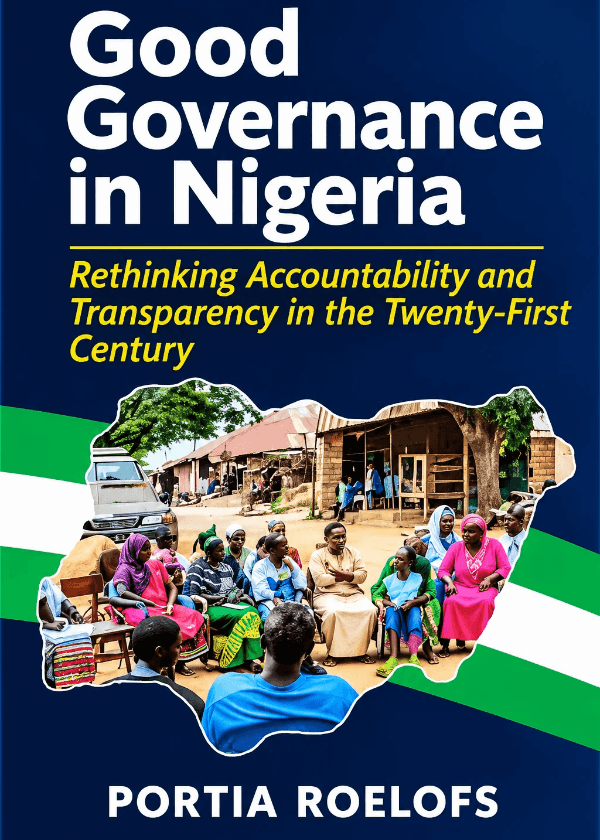
Description
Good Governance in Nigeria: Rethinking Accountability and Transparency in the Twenty-First Century by Portia Roelofs examines the meaning and practice of good governance in Nigeria, focusing on accountability, transparency, political leadership, and the relationship between government institutions and citizens.
Drawing on original fieldwork in Nigeria, the book explores how ideas of good governance are understood, practised, and contested within the country’s political environment. It examines the development of the Lagos Model of governance in southwestern Nigeria and considers how political leaders, government officials, market leaders, traders, and other citizens contribute to discussions about effective governance.
The author challenges conventional approaches that treat good governance simply as a matter of technical reforms and institutional procedures. Instead, she develops the idea of socially embedded good governance, highlighting the importance of local experiences, public participation, accessibility, and relationships between leaders and the people they serve.
The book also explores important themes such as democracy, political accountability, transparency, inequality, public trust, technocracy, and populism. It provides readers with a deeper understanding of how governance works in practice and how Nigerian political experiences can contribute to wider debates about democracy and political theory.


Reviews
There are no reviews yet.